
Introduction
One Olympian. Three lakes. One Guinness World Record attempt.
But the toughest challenge wasn’t just the distance — it was the water.
One of the lakes had dominated headlines for its “dangerous” water quality, with the blame placed squarely and repeatedly on the water company. Yet when our triggered micro-sampler captured a perfectly timed eDNA sample, the truth emerged.
The contamination wasn’t solely human.
Wildlife contributed just as much as people, proving that the narrative of a single culprit was far too simple and often unfair.
The blended approach of real-time sensors + automatic micro-sampling + eDNA analysis reveals what headlines often miss: endurance athletes face real risks, but the sources aren’t always what the public assumes.
When, Where and Why
In the summer of 2025, Olympic open-water swimmer Hector Pardoe attempted something never done before: swimming the lengths of Loch Lomond, Windermere and Llyn Tegid within 24 hours. The gruelling 55 km challenge across Scotland, England and Wales was designed to raise awareness about the state of the UK’s waterways.
The physical challenge alone was immense. Hector swam through darkness, cold water and exhaustion for more than half a day. But another concern hung over the attempt: water quality.
Across the UK, lakes and rivers have increasingly dominated headlines because of pollution concerns. When contamination is detected, the explanation often appears simple and immediate: sewage from the local water company.
But water systems, and the sources of pollution within them, are rarely that straightforward. This challenge provided a unique opportunity to demonstrate why.
Real-Time Monitoring in the Water
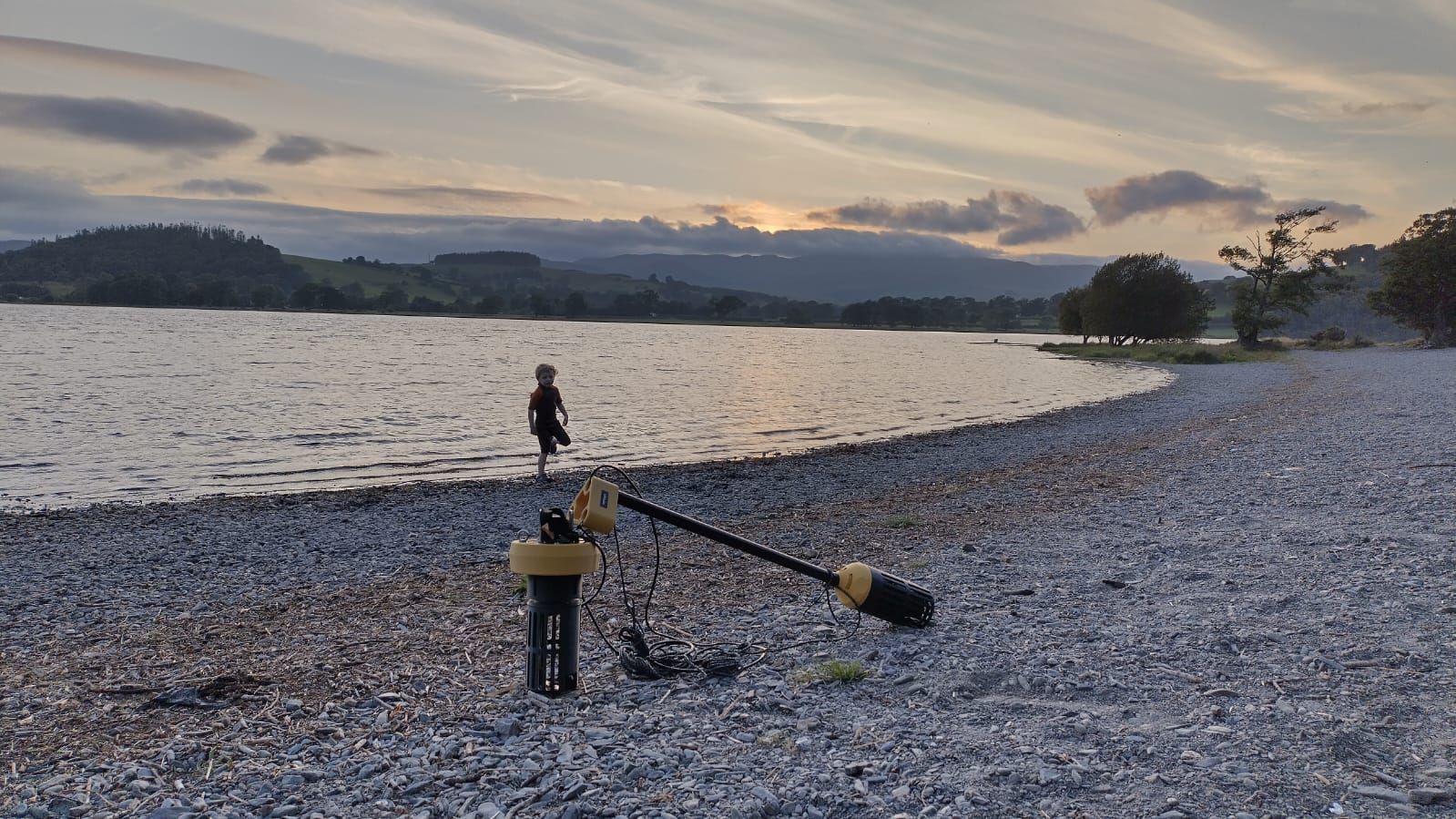
During the swim, a real-time Seneye water quality sensor travelled alongside the support boat, continuously monitoring the water Hector was swimming through.
The device recorded key parameters that indicate environmental health, including:
- toxic ammonia (NH₃)
- pH
- dissolved oxygen
- temperature
- turbidity
Together, these measurements provide an immediate picture of the conditions affecting both aquatic life and human safety.
Real-time monitoring is particularly valuable in dynamic environments such as lakes and rivers, where pollution events can occur suddenly and disappear just as quickly.
However, detecting a change in water quality is only part of the story.
The more important question is often: Where did the pollution come from?
Catching Pollution in the Act
To answer that question, the sensor system was paired with an automatic micro-sampler.
This device activates when certain conditions are detected, such as when toxic ammonia levels rise. At that moment, the sampler captures a water sample automatically. That sample can then be analysed using environmental DNA (eDNA) techniques.
eDNA analysis looks for biological signatures in the water. In this case, our partners at Applied Genomics detect levels of E. coli and enterococci and use microbial source tracking (MST) and broader biodiversity indicators to uncover even more information about the pollution source.
These markers reveal whether contamination is likely to come from human sewage, livestock, wildlife, or other sources. Instead of guessing, the system captures the evidence at the exact moment pollution occurs.
When the Results Challenge the Narrative
At one of the lakes involved in the challenge, water quality had been heavily criticised in the media. Reports had repeatedly suggested that poor bacterial readings were the result of sewage discharges from the local water company.
But when a triggered micro-sample from the site was analysed, the results told a more complex story. The eDNA results showed that wildlife contributed as much bacterial contamination as humans.
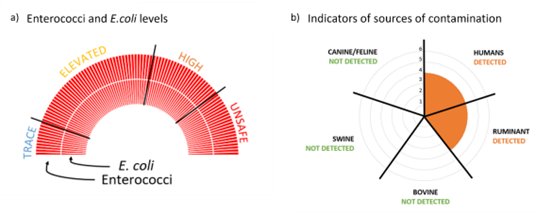
This finding didn’t suggest the lake was free from human influence, but it demonstrated that the pollution signal was not coming from a single source.
Waterfowl, livestock, wildlife, surface runoff, and human waste can all contribute similar bacterial indicators. Without source-tracking tools, these signals are easily misinterpreted.
In other words, the headlines blaming one culprit were missing half the story.
Why Source Tracking Matters
Traditional water monitoring often relies on periodic sampling, sometimes weekly or even less frequently. That approach creates two major problems:
- Short pollution events are easily missed.
- The source of contamination is rarely identified.
When high bacterial levels are detected, investigators may spend weeks searching upstream for an outfall pipe that might not even exist.
This wastes time, resources, and sometimes damages trust between regulators, utilities, and communities.
By contrast, combining continuous sensors, triggered sampling, and eDNA analysis provides a much clearer picture:
- Sensors detect the pollution event in real time.
- The micro-sampler captures the sample at the exact moment it occurs.
- eDNA analysis identifies the likely biological source.
The result is evidence-based attribution rather than assumption.
The Risk of Solving the Wrong Problem
Accurate source identification matters for another reason: the solutions applied depend entirely on what the pollution source is believed to be.
If every ammonia spike or bacterial signal is assumed to be sewage, the response may be to demand expensive wastewater infrastructure upgrades.
Those upgrades can cost millions of pounds, ultimately funded through higher water bills. But if the contamination is actually coming from livestock entering the water, wildlife populations, or diffuse agricultural runoff, replacing pipes will not fix the problem.
The pollution will continue.
The river or lake will not improve.
And the public will have paid for a solution that targeted the wrong cause.
In a complex environmental system like a river catchment, misdiagnosing the source of pollution risks solving the wrong problem entirely.
A More Honest Picture of Pollution
Perhaps the most important lesson from this case study is not about technology — it’s about fairness.
Water pollution in the UK is a serious issue. Sewage discharges, agricultural runoff, urban drainage and wildlife impacts all play a role. Solving the problem requires accurate evidence about who is responsible and when.
Blaming the wrong source helps no one.
What the Olympic swimmer’s challenge revealed is that the future of water monitoring lies in blended systems:
- real-time environmental sensors
- automatic micro-sampling
- eDNA and microbial source tracking
Together, these tools move water monitoring from guesswork to forensic science.
And sometimes, that science reveals something surprising:
Before you blame the pipe, you need to understand the source.